If you have ever wondered how plastic pipes keep their finish how medicine tablets come out of molds easily or why some construction powders do not stick together when it is really humid. There is a special chemical that makes all of this happen.
That compound is calcium stearate.
You may not know what calcium stearate is because it is not something like baking soda or salt that people use every day. Calcium stearate is used a lot in many industries.
You can find calcium stearate in the pipes in your house and in the paper used in nice magazines. Calcium stearate helps things move smoothly it keeps water out. It helps keep things from getting too hot.
In this guide we will talk about what calcium stearate's why it is so important, to many industries and how it is used in different types of manufacturing.
Defining the Basics: What Exactly Is Calcium Stearate?
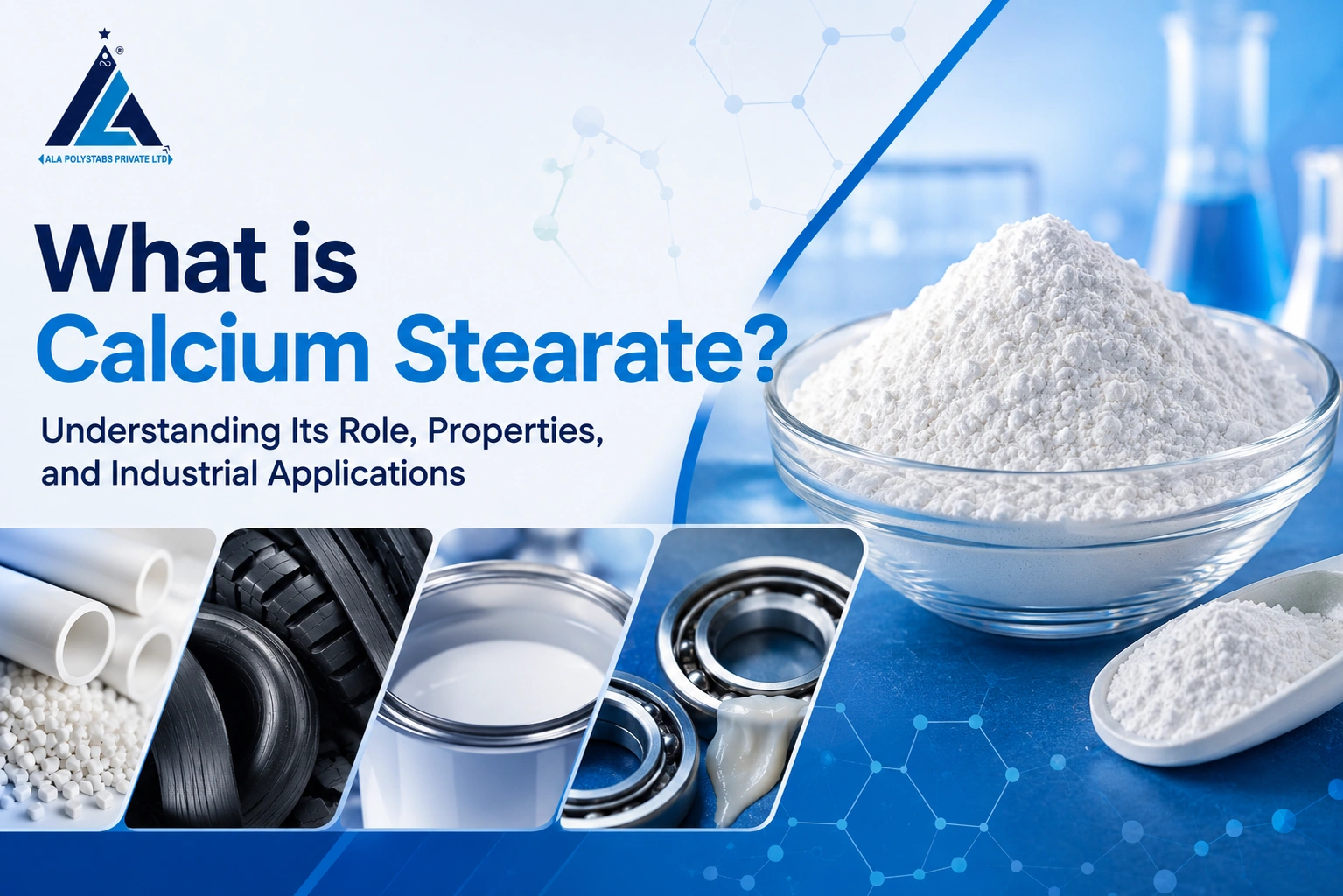
To understand how calcium stearate functions it helps to start with the meaning of stearate. A stearate is a type of salt or ester that comes from acid. Stearic acid is a natural fatty acid that is found in animal fats and vegetable oils like palm oil or coconut oil. When stearic acid mixes with a calcium compound, like calcium hydroxide or calcium chloride it makes calcium stearate. Calcium stearate is a powder that is very fine and feels silky when you touch calcium stearate.
Key Chemical & Physical Characteristics
- Water Insoluble: Unlike sodium or potassium soaps, calcium stearate does not dissolve in water. This hydrophobic (water-repellent) nature is one of its most valuable properties.
- Non-Toxic & Safe: It is generally recognized as safe (GRAS) by regulatory bodies like the US FDA, which is why it freely finds its way into cosmetics, pharmaceutical pills, and food processing.
- Internal & External Lubricant: It reduces friction between particles internally, as well as between polymers and metal processing equipment externally.
- Thermal Stability: It can withstand high processing temperatures without breaking down or causing severe discoloration.
How Is Calcium Stearate Produced?
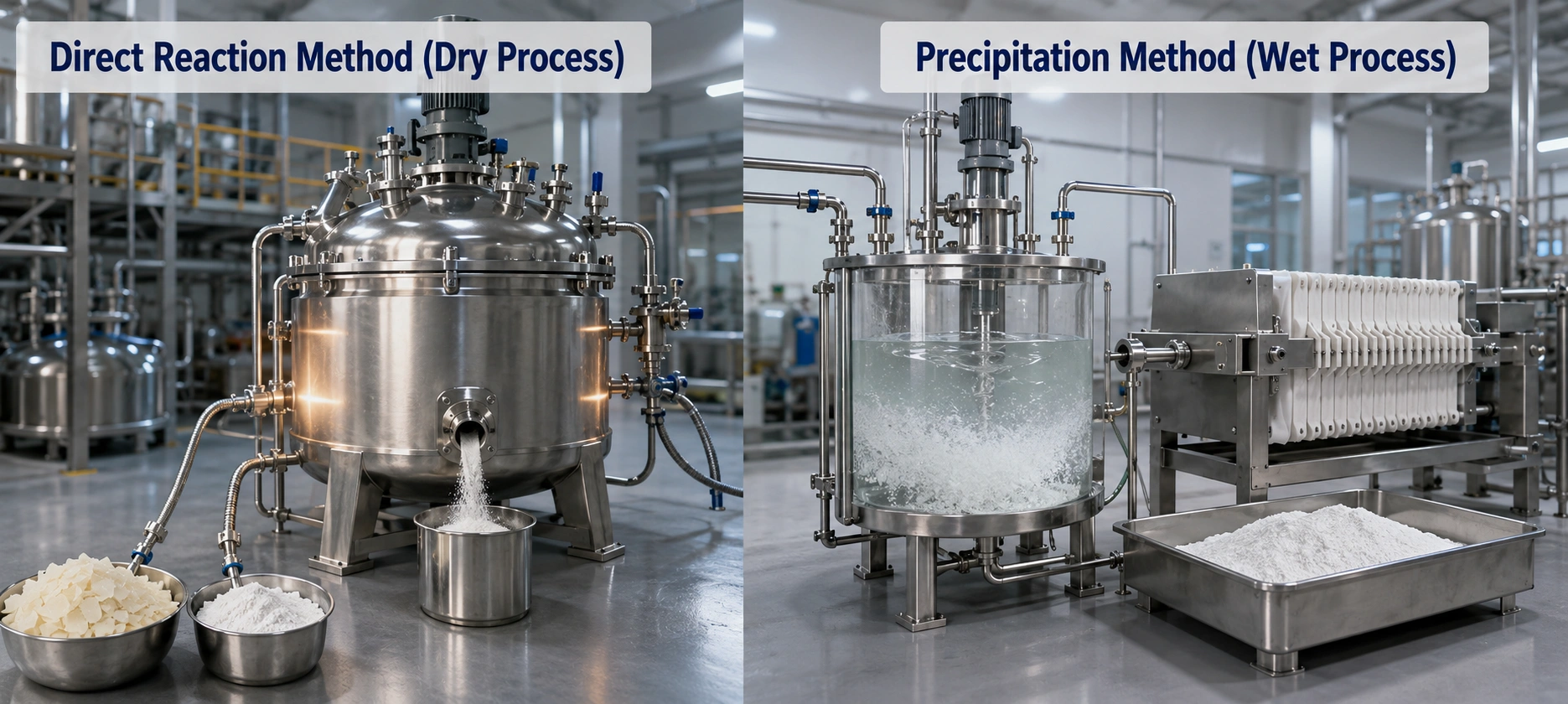
For those interested in the manufacturing side, commercial producers generally use two primary synthesis methods:
- The Direct Reaction Method (Dry Process): Stearic acid is melted and directly reacted with calcium oxide or calcium hydroxide at elevated temperatures. This produces a high-purity powder with minimal wastewater.
- The Precipitation Method (Wet Process): Sodium stearate is first formed by reacting stearic acid with caustic soda. Then, calcium chloride is added to precipitate out the calcium stearate. This yields an exceptionally fine particle size with high surface area, ideal for delicate applications like cosmetics and pharmaceuticals.
When you work with a certified calcium stearate manufacturer you can be sure that they will use a production method that gives you the particle size you need. This is important because you want the calcium stearate to have the bulk density and purity level, for your specific industrial formulation. You want to get the calcium stearate right so it works well in your formulation. Working with a certified calcium stearate manufacturer helps you get the calcium stearate you need.
Core Industrial Uses of Calcium Stearate
Because of its unique blend of water repellency, lubricity, and stability, the broad spectrum of Industrial Uses of Calcium Stearate spans across dozens of major manufacturing sectors:
1. The Plastics & Polymer Industry
Plastics are, without a doubt, the largest consumer of calcium stearate worldwide. Without processing aids, raw synthetic resins like PVC (Polyvinyl Chloride) and Polyolefins (Polyethylene and Polypropylene) would degrade under the intense heat and mechanical friction of extruders.
2. Pharmaceuticals and Nutraceuticals
Have you ever taken a vitamin tablet and noticed how smooth and uniform it is? Calcium stearate plays a vital role here as a tablet mold-release agent. It stops the raw powder blend from sticking to the metal punches and dies during high-speed compression.
3. Construction & Building Materials
Because calcium stearate actively repels moisture, it is routinely mixed into dry concrete blends, mortars, stucco, and render systems. It drastically reduces water absorption, preventing efflorescence (those ugly white salt stains on brickwork) and extending the structural lifespan of concrete exposed to harsh weather.
4. Paper Coating and Finishing
In paper manufacturing, calcium stearate is added to coating formulations to provide a high-gloss finish, prevent dust formation during cutting/slitting, and stop the paper from cracking when folded.
5. Rubber and Personal Care
It serves as an anti-tack agent in rubber manufacturing, preventing raw rubber sheets from sticking together during storage. In personal care, it acts as a thickening agent and lubricant in compact powders, deodorants, and creams.
Detailed Focus: Calcium Stearate Role in Plastic & Pharmaceutical Sectors
While its applications are widespread, the specialized Calcium Stearate Role in Plastic & Pharmaceutical production deserves a closer, side-by-side look:
| Sector | Primary Function | Practical Benefit |
|---|---|---|
| PVC Processing | Heat Stabilizer & External Lubricant | Prevents polymer burning; ensures smooth pipe extrusion. |
| Polyolefins (PE/PP) | Acid Scavenger | Neutralizes acidic catalyst residues to stop machinery corrosion. |
| Pharma Compression | Mold Release & Flow Aid | Ensures tablets punch cleanly without sticking to manufacturing dies. |
| Rubber Compound | Anti-Tack Agent | Prevents unvulcanized rubber sheets from fusing in storage. |
The PVC Synergy
In rigid PVC (like window profiles and sewage pipes), calcium stearate is rarely used alone. It works in tandem with lead, tin, or zinc-based stabilizers. While zinc or lead provides chemical heat stability, calcium stearate provides the physical lubrication necessary to push molten plastic smoothly through metal machinery dies without burning or dragging.
Key Benefits of Using High-Grade Calcium Stearate
Why do chemical engineers consistently select calcium stearate over alternative metallic soaps like zinc stearate or magnesium stearate?
- Cost Efficiency: It delivers superior lubrication and stabilizing properties at a relatively low cost per metric ton.
- Environmental Safety: Unlike lead-based or cadmium-based processing aids of the past, calcium stearate is eco-friendly and non-hazardous to operators.
- Neutral Taste and Odor: Crucial for food-contact plastics (like milk bottles and cling film) and oral pharmaceutical tablets.
- Consistently High Melting Point: With a melting point typically around 140°C to 155°C, it remains stable throughout aggressive thermal manufacturing cycles.
What to Consider When Sourcing Calcium Stearate
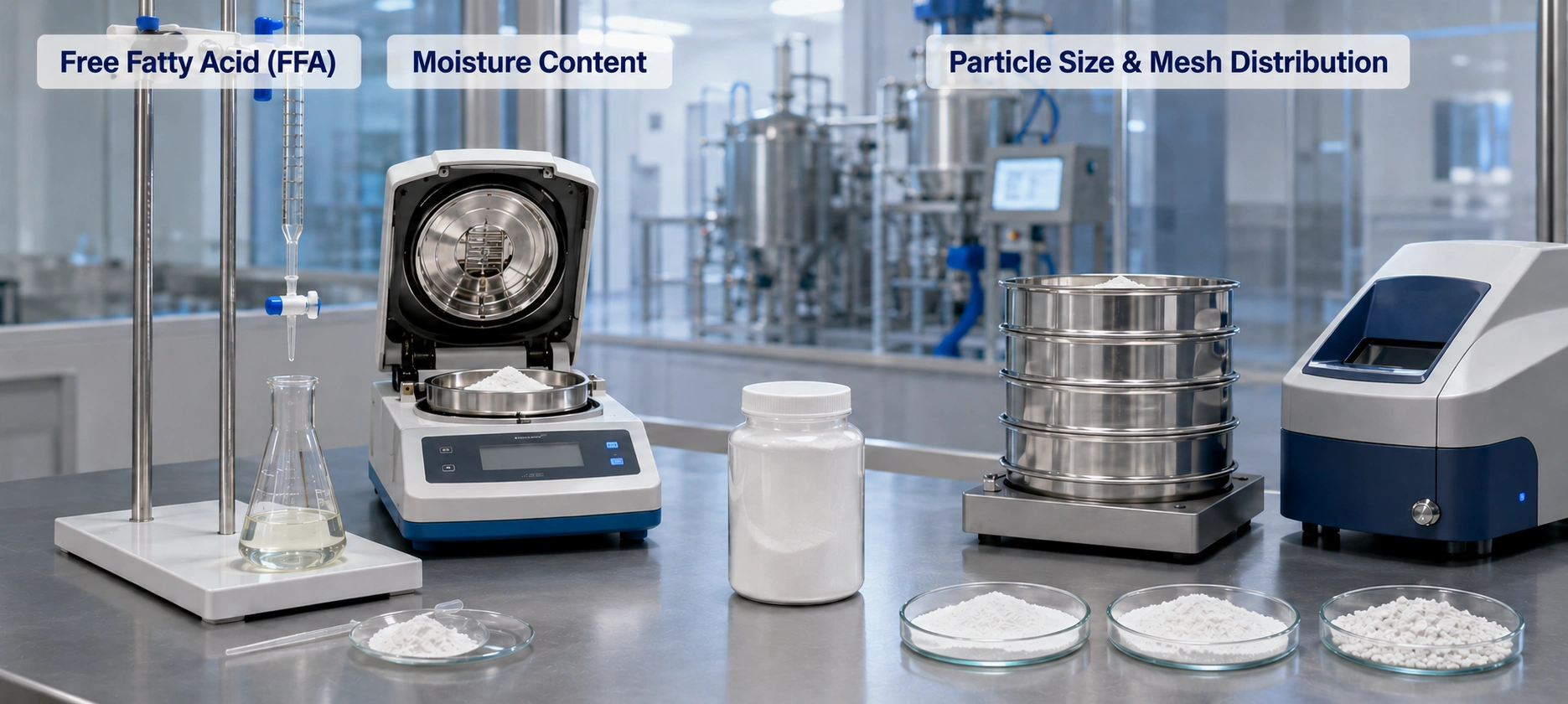
Not all calcium stearate powders are created equal. If you are an industrial formulator or procurement manager, picking the right grade requires paying attention to a few technical parameters:
- Free Fatty Acid (FFA) Content: Unreacted stearic acid can alter processing behavior. High-purity grades keep free fatty acids extremely low.
- Moisture Content: For moisture-sensitive applications like plastics extrusion, low-moisture grades are mandatory to prevent steam bubbles and voids in the final product.
- Particle Size & Mesh Distribution: Ultrafine micronized powders dissolve and disperse faster in pharma and clear plastic formulations, whereas coarser grades suit heavy construction blends.
When you need tailor-made chemical additive performance, choosing high-purity Calcium Stearate Solutions engineered specifically for your machinery setup prevents costly production downtime.
Optimize Your Production Line with Premier Polymer Additives
Looking for consistent purity, reliable bulk supply, and custom particle grades for your processing needs? At alapolystabs, we manufacture high-performance metallic stearates and polymer stabilizers tailored to meet stringent global quality benchmarks.
Explore our full range of processing aids at alapolystabs and request your custom sample today!
Final Thoughts
Calcium stearate might be invisible to the average consumer, but modern manufacturing simply couldn't run as efficiently without it. Whether it's keeping plastic processing lines running smoothly, protecting concrete from water damage, or ensuring your medicine tablets are accurately dosed and stamped, this versatile metallic soap remains an irreplaceable backbone of industrial processing.
Frequently Asked Questions
Q1. Is calcium stearate safe for food contact and pharmaceutical products?
Yes, calcium stearate is non-toxic and recognized as safe (GRAS) by global regulatory bodies, including the US FDA. It is widely used as a tablet lubricant in pharmaceuticals and as an anti-caking agent or processing aid in food-grade packaging plastics.
Q2. Is calcium stearate water-soluble?
No, calcium stearate is completely insoluble in water. Its strong hydrophobic (water-repellent) nature makes it an excellent waterproofing additive for concrete, building materials, and protective paper coatings.
Q3. What is the difference between calcium stearate and zinc stearate?
While both are metallic soaps used as industrial lubricants:
- Calcium Stearate offers superior heat stability and serves as an acid scavenger in polyolefins (PE/PP) without causing discoloration.
- Zinc Stearate has a lower melting point and provides better surface gloss, making it ideal for clear plastics, paints, and wood coatings.
Q4. What is the role of calcium stearate in PVC processing?
In PVC manufacturing, calcium stearate acts as anc external lubricant and heat stabilizer. It prevents the molten polymer from sticking to hot metal extruder machinery and neutralizes hydrochloric acid (HCl) generated during processing, preventing material burning.
Q5. How does calcium stearate work as a tablet lubricant in pharma?
During high-speed tablet compression, calcium stearate reduces friction between the powdered active ingredients and the metallic die walls. This ensures tablets pop out cleanly without sticking to the machine punches.