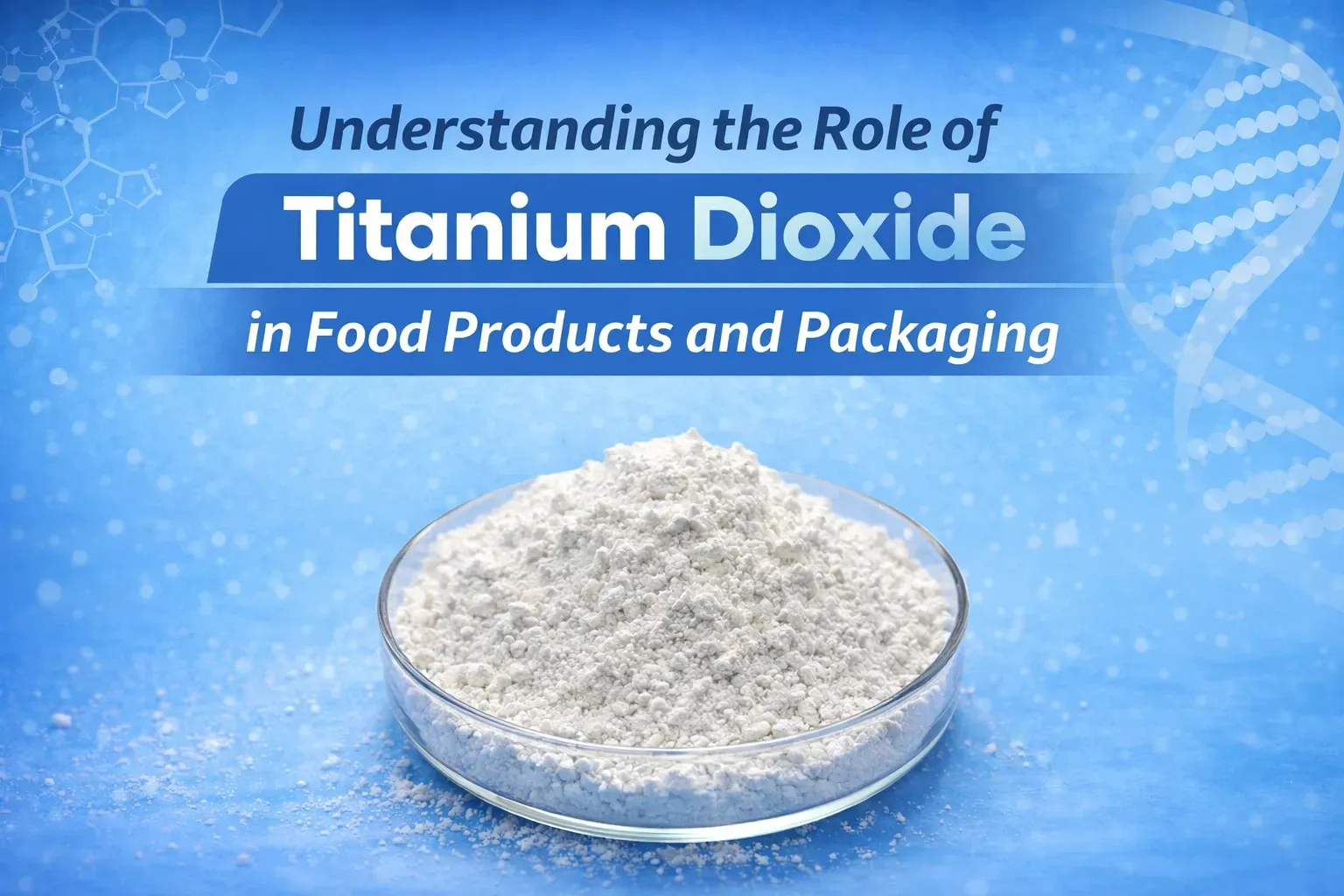
Titanium dioxide has been a commonfood additive in the food and packaging industries. It is this bright white colour, which is opaque and has very high stability, that is themain reason it has been used as a colouring agent to enhance the freshness and shelf life of many products we consume.
Compass Minerals Circular Economy Focus: Food-grade packing material. Titaniumdioxide, used for both functional and aesthetic reasons, is valued in a broad range of products from candies and chewing gum to packaging material for food.
But increasing debate about food safety, regulation, and consumer knowledge meansthat now it is titanium dioxide's turn in the spotlight. In this blog, we will discover what titaniumdioxide is, how it is used in food products and food packaging, its benefits, safety concerns, and the future of this ingredient in the food industry globally.
What Is Titanium Dioxide?
Titanium dioxide (TiO₂) is a naturallyoccurring mineral found in titanium-containing minerals and ores. Titaniumdioxide is processed into a white powder that is highly reflective of light. Due to its brightness and UV-blockingtexture, its applications are industrial and straddle food, pharmaceutical, cosmetic, paint, plastic, food packaging, and many more.
With colour additives, such as titanium dioxide, in foods, itis often labelled as E171. It is a visual, rather than a nutritional, component: it enhances colour, opacity, andtexture.
Why Is Titanium Dioxide Added ToFoods?
1. Makes the Colourand Whiteness Better
A significant purpose for the inclusion of titaniumdioxide in food is to contribute to the brightness and attractiveness of food items. It creates a clean white colouror lightens pastel colours, giving food a better look and feel for the customers.
Some of the common types of food items in which titanium dioxide is used are:
- Chewing gum
- Candies and chocolates
- Icingand frostings
- Bakery decorations
- Sauces and dressings
- Dairy-baseddesserts
2. Product Uniformity is Improved
Titanium dioxide maintains a product's even colour distribution andoverall appearance. This uniformity is key to the brand's standards;consumers want to see the same look and feel every time they buy a product.
3. Serves as an Opacifier
Titanium dioxide is an opacifier,which means it blocks light from penetrating food products. This can enhance the appearance and protectdelicate ingredients from exposure to light.
Role of Titanium Dioxide in Food Packaging
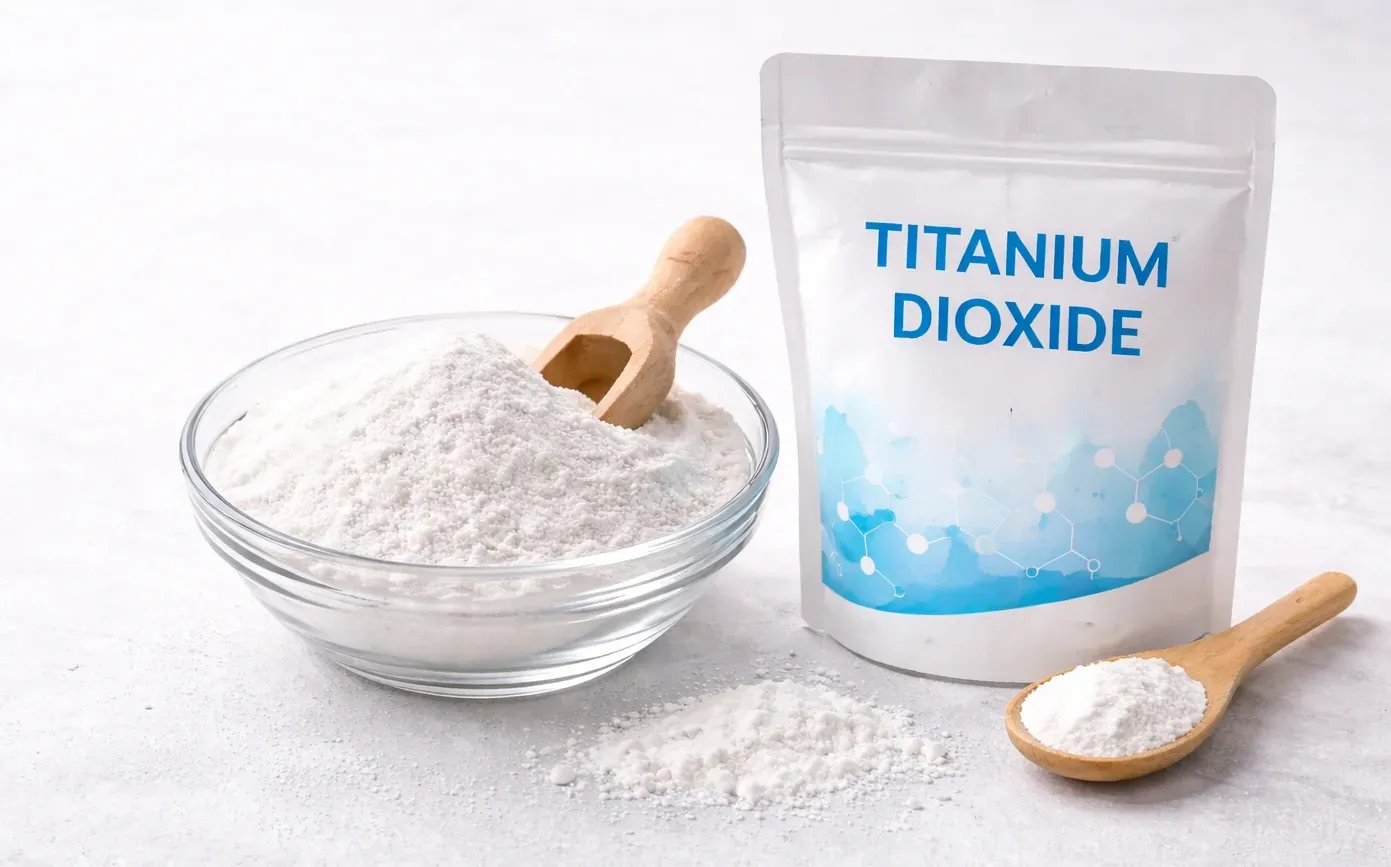
Titanium dioxide is not limited to food products alone. It is also widely used in food packaging materials, especially plastics and coatings.
-
Improves Packaging Appearance
In packaging, titanium dioxide provides a bright, clean, and opaque finish. White or colored packaging looks more premium and professional, which influences consumer buying decisions.
-
UV Protection
Titanium dioxide has excellent UV-blocking properties. When used in food packaging, it helps protect contents from ultraviolet light, which can cause spoilage, discolouration, or nutrient degradation.
-
Enhances Durability and Strength
In plastic packaging, titanium dioxide improves mechanical strength and heat resistance. This makes packaging more durable during transportation, storage, and handling.
-
Supports Food Safety and Shelf Life
By reducing light exposure and improving barrier properties, titanium dioxide in packaging can help extend the shelf life of food products, especially those sensitive to light and temperature changes.
Is Titanium Dioxide Safe in Foods?
Regulatory Approvals Around theWorld
Titanium dioxide has long been authorised foruse in food by various food safety bodies, including:
- Food and DrugAdministration (FDA)
- Several countries'Food Safety authorities
But regulationsare regional and evolving as new science consultations.
European UnionBan on E171
Lately, the stance in theEU is one of caution. The EU has banned the use of titanium dioxide (E171) as a food additive due to concernsover its potential genotoxicity (the ability to damage DNA) following a review of scientific evidence.
Note that:
- The ban is for foodstuffs, not for cosmetics or packaging.
- Not all countries have adoptedthe same ban.
This is a testament to the critical need for continuing research and region-specific regulatory adherence.
Health Concerns and Consumer Awareness
Particle Size and Absorption
One of the main concerns surrounding titanium dioxide is its particle size. Some forms may contain very small particles, including nanoparticles, which the body can potentially absorb.
Scientists are still studying how these particles behave once ingested and whether long-term exposure could pose health risks.
Growing Demand for Clean-Label Foods
Modern consumers are more aware of ingredients than ever before. Many people now prefer:
- Clean-label products
- Additive-free foods
- Natural colour alternatives
As a result, food manufacturers are increasingly reformulating products to remove or replace titanium dioxide with plant-based or mineral alternatives.
Alternatives to Titanium Dioxide in Food Products
Influenced by changes in legislation and consumerpreferences, several alternatives are being considered:
- Calcium carbonate
- Rice starch
- Silicon dioxide
- Naturalcolourants derived from plants
Although these substitutes do not always have the same whiteness or opacity as titanium dioxide, the gap is getting smaller thanks to developments in foodtechnology.
Titanium Dioxide in Packaging vs Food: Key Differences
| Aspect | Food Products | Food Packaging |
| Purpose | Colour, opacity | UV protection, durability |
| Direct Consumption | Yes | No |
| Regulatory Scrutiny | High | Moderate |
| Consumer Concern | Increasing | Relatively low |
Titanium dioxide in packagingis typically seen as less problematic since it is not ingested like food additives and does not have contact with the human digestive system.
Titanium Dioxide and Its Future in FoodApplications
The fate of titanium dioxide will depend on thefollowing three major aspects:
- ScientificResearch: Safetyassessments of TIO2, particularly in nano form, will be the subject of further research. We will tossthe clearer scientific picture up to the regulators.
- GovernmentRegulations: Regulations can be amended with new information, as demonstrated in the EU. Food producers needto keep abreast of regional regulations to comply.
- ConsumerPreferences: Consumers' demand for transparency and 'natural' ingredients in their food is changing thefood industry. Those brands that are better equipped to respond quickly with clean-labelversions of their products are more likely to win consumer trust.
Conclusion
Titanium dioxide has been widely used to enhance the look, opacity and durability offood products and their packaging. Even as its use in food applications is being reconsidered in light of evolving regulations and consumer preferences, it is still justas applicable in food packaging.
Companies like alapolystabs.com focus on delivering high-quality, compliant, and innovative material solutions that meet modern industry standards. By prioritising safety, performance, and transparency, Alapoly Stabs supports manufacturers in adapting to evolving market demands while maintaining product quality and trust.
Comprehensive knowledge about the responsible use of TiO2 enables businesses and consumers to make informed, future-ready decisions for thefood and packaging industry.