Leading Supplier
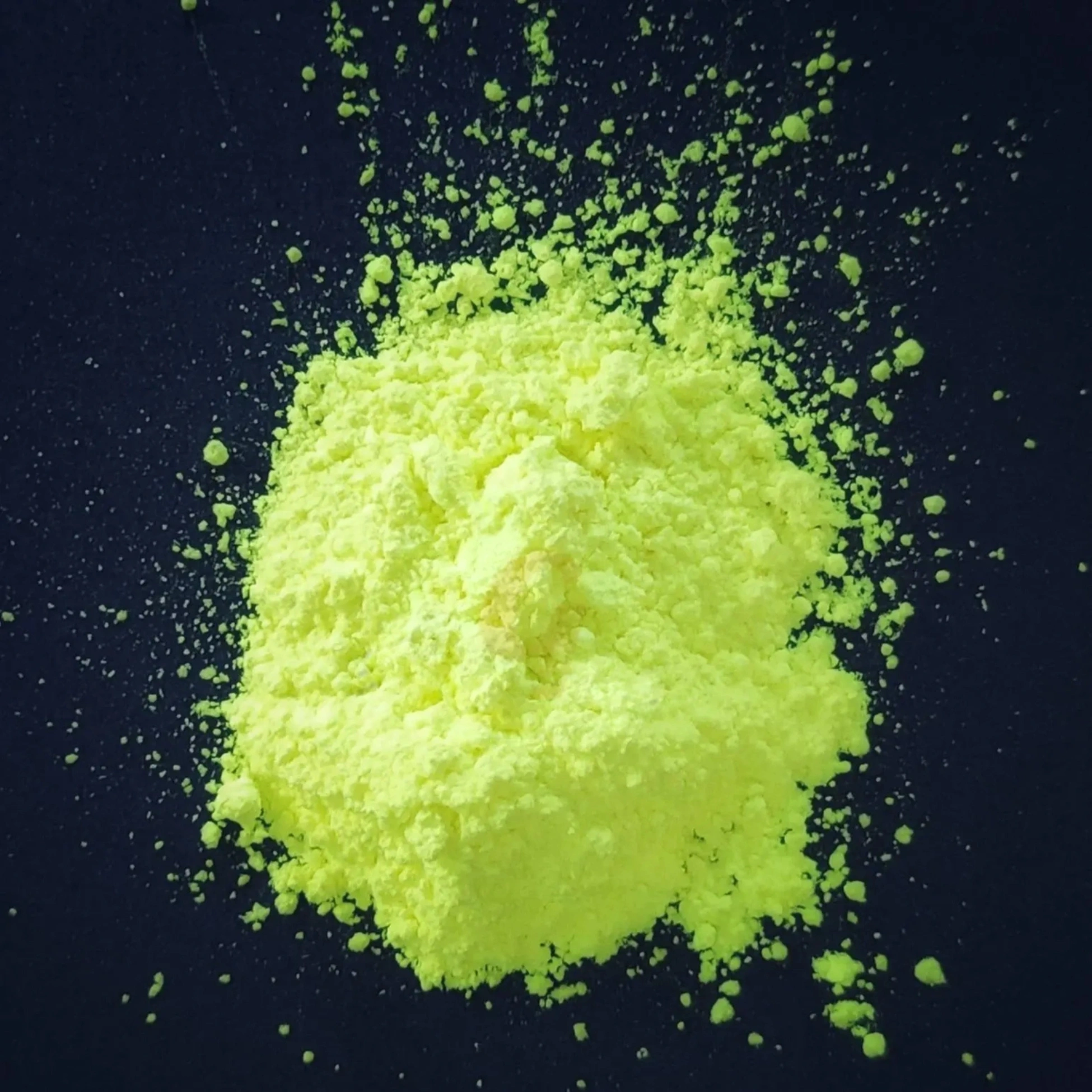
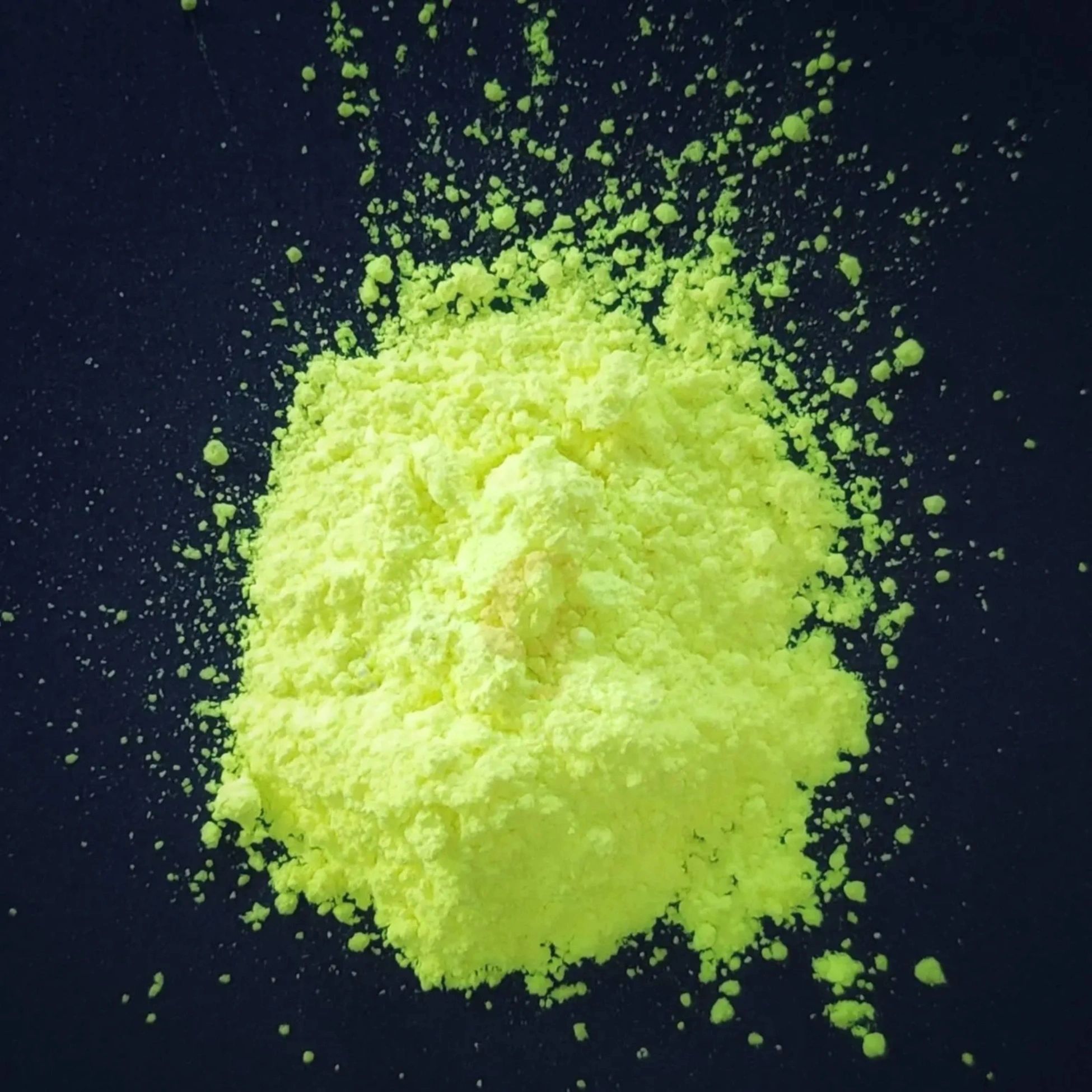
Optical brightener powder
| Specification |
Details |
| Purity |
> 98% |
| Grade Standard |
OB-1 and OB Grade |
| Usage / Application |
Industrial & Commercial |
| Physical State |
Powder |
| Colour |
Odourless, Pale-Yellow to Off-White |
| Packaging Size |
25 kg |
Optical brightener powder, also known as a fluorescent whitening agent (FWA), is a speciality optical brightening agent widely used across industries to enhance whiteness and brightness without altering the material’s original colour. In simple words, it gives a whitening effect to the material. To understand the science behind it, read what is an optical brightener and how does it work.
Optical brightening agent is a fine, pale-yellow to off-white powder that is virtually colourless. It works by absorbing light in the ultraviolet and violet rays of the spectrum (especially around 340-370 nm) and then re-emitting standard blue light (around 420-470 nm), counteracting the natural yellowish tint and enhancing its brightness.
At ALA Polystabs, we manufacture and supply high-quality optical brightening agents in India that deliver superior brightness levels not achievable with traditional bleaching agents or white pigments alone.
Optical Brightening Agent Manufacturers & Suppliers in India
ALA Polystabs Private Limited is one of the leading optical brightening agent manufacturers in India, supplying premium-grade optical brighteners to domestic and international markets. We are one of the manufacturers of speciality chemical companies in India that provide several chemicals across the world. Our high-purity optical brighteners are produced according to international quality standards and are perfect for use in textiles, plastic, detergents, paper, etc.
Why Choose ALA Polystabs as Your Optical Brightening Agent Manufacturer in India
When it comes to sourcing high-performance optical brightening agents, choosing the right manufacturing partner is critical for product consistency, compliance, and long-term reliability. ALA Polystabs Private Limited stands out as a trusted optical brightening agent manufacturer in India, offering world-class quality, scalable supply, and technical expertise to industries worldwide.
Optical Brightener / Optical Brightening Agent for Industrial Applications
Optical brightening agents are essential industrial additives used by manufacturers to improve product whiteness, visual appeal, and overall perceived quality. It is indispensable in modern manufacturing where superior whiteness and brightness influence the product quality and customer preferences.
Technical Specifications of Optical Brightening Agent
Here are all the technical specifications of Optical Brightening Agent-
|
Parameter
|
Specification / Value (Example for a General-Purpose OB)
|
|
Chemical Name
|
Varies by type (e.g., Triazine-Stilbene, Coumarin, or Pyrazoline derivative)
|
|
CAS Number
|
Varies (e.g., 16090-02-1 for a common type)
|
|
Chemical Class
|
Organic Fluorescent Whitening Agent (FWA)
|
|
Appearance
|
Very fine, free-flowing pale yellow to off-white powder
|
|
Odor
|
Faint, characteristic odor
|
|
Active Content (min)
|
≥ 99%
|
|
Ash Content (max)
|
≤ 0.5%
|
|
Moisture Content (max)
|
≤ 1.0%
|
|
pH (1% Solution)
|
Neutral to slightly alkaline (7.0 – 9.0, varies)
|
|
Melting Point
|
Varies significantly by chemical structure; typically > 200°C (decomposes).
|
|
Particle Size
|
95% min passing through 200 mesh. Custom micronisation available.
|
|
Solubility
|
Typically soluble in polar organic solvents; low solubility in water. Solubility varies by grade.
|
|
Fluorescence Emission Peak
|
430 – 450 nm (Blue-Violet region, for whitening effect)
|
|
Whiteness Under UV Light
|
Intense blue-white fluorescence
|
|
Compatibility
|
Compatible with polymers (PVC, PE, PP), paper coatings, textiles, and detergent formulations.
|
|
Light Fastness
|
Good to Excellent (varies by grade and application)
|
|
Chemical Stability
|
Stable under normal processing conditions; sensitive to prolonged UV exposure and strong oxidants.
|
|
Shelf Life
|
24 months from the date of manufacture when stored in a cool, dark, dry place.
|
|
Primary Function
|
Absorbs UV light and re-emits blue visible light, masking yellowness and enhancing brightness and whiteness.
|
|
Packaging
|
Standard 25 kg & Custom (on demand)
|
Physical Properties of Optical Brighteners
It is organic compounds that absorb UV light and emit blue fluorescence to enhance whiteness. It mainly has two types, like OB-1 and OB, which exhibit solid, powdery forms with high thermal stability for textile and detergent applications.
| Property |
Description/Details |
Typical Values (e.g., OB-1) |
Typical Values (e.g., OB) |
| Appearance |
Fine, homogeneous powder or granules; white to off-white colour |
Light yellow powder |
Yellowish powder |
| Particle Size |
Micronised for dispersion; affects solubility and application efficiency |
1–10 μm |
2–5 μm |
| Density |
Bulk density influences packaging and handling |
0.4–0.6 g/cm³ |
1.18–1.21 g/cm³ |
| Melting Point |
High thermal stability for processing up to 200–250°C |
210–212°C |
195–205°C |
| Solubility |
Poor in water; soluble in organic solvents like DMF, toluene, and acetone |
<0.1 g/L in water; >50 g/L in DMF |
Insoluble in water; soluble in oils |
| Volatility |
Low vapour pressure; stable during drying and curing |
Negligible at room temp |
Low |
| Fluorescence |
Blue-violet emission (420–480 nm) under UV (340–370 nm excitation) |
Peak at 450 nm |
Peak at 430 nm |
| Particle Morphology |
Crystalline or amorphous; impacts brightness yield |
Crystalline needles |
Fine crystals |
Chemical Properties of Optical Brighteners
Let’s explore its chemical properties-
| Property |
Description / Details |
Typical Values (e.g., OB-1) |
Typical Values (e.g., OB) |
| Chemical Formula |
Complex aromatic structures with sulfonate or ester groups for substantivity |
C28H20N2O2 |
C28H18O2N2 |
| Molecular Weight |
Ranges 300–1000 Da; lower for better diffusion |
396.47 g/mol |
414.46 g/mol |
| pH Stability |
Effective in neutral to alkaline conditions; degrades in strong acids |
Stable pH 4–10 |
Stable pH 5–11 |
| Hydrolysis Resistance |
Ester linkages hydrolyse in alkali; stilbenes photodegrade over time |
Good in neutral; poor in NaOH |
Resistant to mild alkali |
| Oxidation Stability |
Sensitive to bleach (ClO₂, H₂O₂); antioxidants extend life |
Degrades with oxidants |
Moderate vs. peroxides |
| Photostability |
UV exposure causes stilbene degradation; half-life 100–500 hours of sunlight |
Fair (200+ hrs) |
Good (300+ hrs) |
| Reactivity |
Forms covalent bonds with cellulose (reactive types); ionic for adsorption |
Anionic adsorption |
Non-ionic, disperses easily |
| Toxicity |
Low acute; potential skin sensitiser; biodegradable under light |
LD50 > 5000 mg/kg (rat) |
Non-toxic, non-irritant |
| Functional Groups |
Sulfonates (-SO3Na) for water solubility; vinyl/aryl for conjugation |
Triazinyl-stilbene |
Benzoxazole |
Packaging Options and Supply Capacity
At ALA Polysabs, we believe that for operational success, reliable and secure packaging is very important. We partner with trusted logistics and provide flexible packaging options for international as well as domestic supplies.
Industries Using Optical Brightening Agents
Optical Brightening Agents (OBAs) or Fluorescent Whitening Agents (FWAs) are used in a vast range of manufacturing industries. It gives a better optical illusion related to whiteness and brightness that cannot be achieved through bleaching agents or pigments. Here are the key industry applications where it is used-
Quality Assurance & Compliance
Being one of the best optical brightening agent manufacturers, supplier and exporters in India, product integrity is our uncompromising commitment. We use international standards and make sure every product meets exact specifications for purity, consistency, and performance. Let’s check out our product are certified with a wide range of certificates-
Delivering premium-grade calcium stearate to industries across the globe with quality, reliability, and innovation
Request a Quote
Frequently Asked Questions – Calcium Stearate
1. What is optical brighter powder?
Optical brightener powder is also known as a fluorescent whitening agent. It is a special type of organic chemical powder that absorbs invisible ultraviolet light and emits it as an intense blue visible light. It gives a blueing effect
2. What is optical brightness used for?
Optical brightness is importantly used to achieve superior whiteness in a wide range of industries. It has been used for paper manufacturing, textile and laundry detergent, plastic and polymer, cosmetic, coating and many more.
3. Is optical brighter powder safer to use?
The safety of optical brightener powder depends entirely on the specific chemical type, purity, and intended application. Always make sure that you are using applications for appropriate safety purposes.
4. How does optical brighter works?
Optical brighter works on the principle of fluorescence. Its molecules absorb UV light from the sunlight, which is not visible to the naked human eye. It absorbs UV rays and instantly releases the energy as blue violet visible light. This emitted blue light compensates for the yellow light reflected by the substrate, resulting in a neutral or cool white appearance with enhanced brightness.
5. What is the shelf life of your optical brightener powder?
The shelf life of optical brighter powder is 24 months from the date of manufacturing if it is stored in the right way. Make sure to keep it away from sunlight, humidity and high temperature. Always store in a cool, dry and dark space in a sealed pack.
6. Can I use Optical brightness powder in all types of plastic?
No, Optical brightness powder cannot be used in all types of plastic. Optical brightener powder is polymer specified. You can only use it in PVC, PS, ABS, PET and certain polyolefins.
7. What is the difference between blue pigment and Optimal Brighter?
Blue pigment and optical brightener work on fundamentally different principles. A blue pigment absorbs all wavelengths of light except blue, which it reflects, but an optical brightener is not a pigment. It is a colourless dye that absorbs UV light and emits blue light.
8. What is light fastness in optical brightness?
Light fastness refers to OB's resistance to fading or degradation upon prolonged exposure to UV light. At Ala Polystabs, get a variety of light fastness in optical brightness powder.